
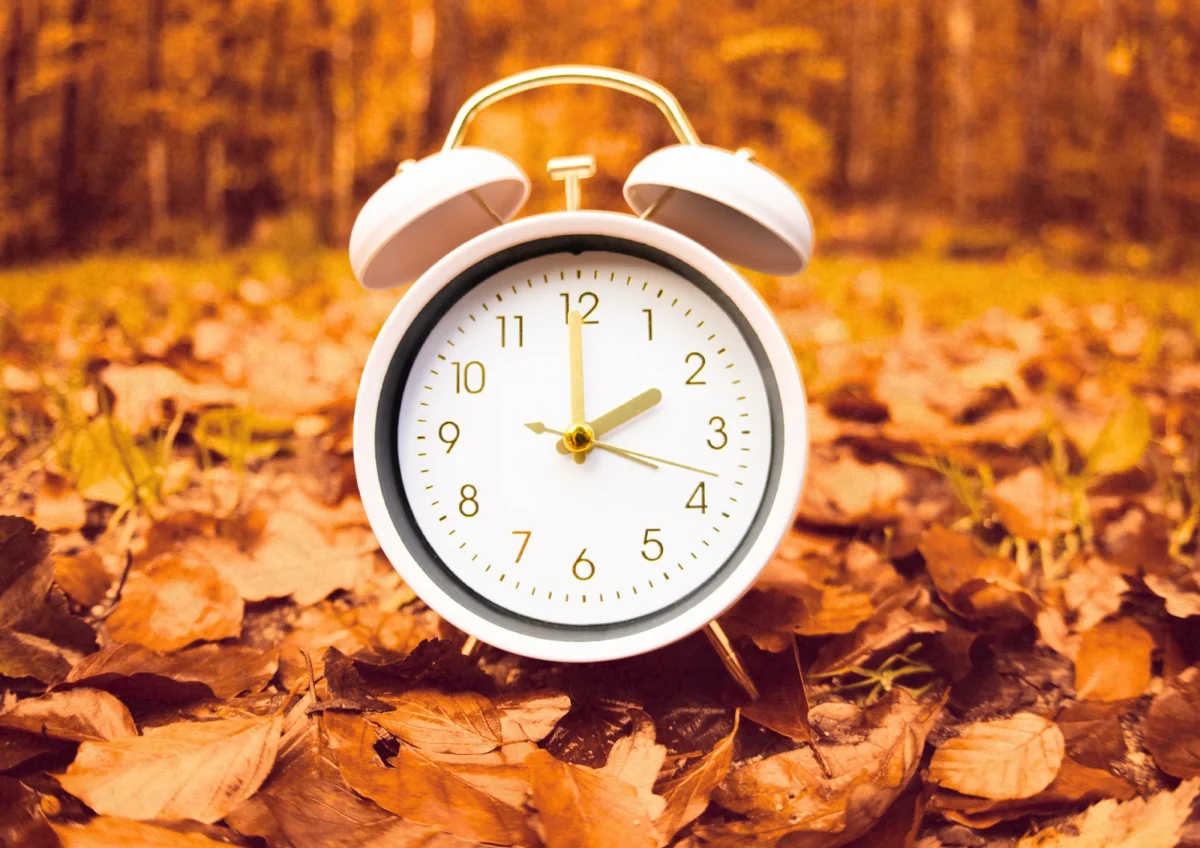
It is now the time of the year many people dread, when the days become shorter and it’s dark by 5:30 p.m. When we gain an hour of sleep, on the first Sunday of November, all clocks fall back one hour and return to standard time, marking the end of daylight saving time.
Daylight saving time was first introduced during World War I, specifically in 1916, in Germany and Austria-Hungary, and eventually adopted by the U.S. in 1918. This was a way to save energy by making better use of daylight hours. The idea was that if people had more daylight in the evening, they’d use less electricity. Now, the U.S., Canada, and the majority of European nations still follow this tradition. Including France, Germany, Spain, and Italy, all observe the time change. However, Russia, Turkey, and Ukraine don’t. While it might seem like just a small adjustment, this time change affects our daily routines and moods more than we realize.
For high schoolers, falling back an hour might sound like a dream come true, one extra hour of sleep! But the effects can be more complicated than that. Our bodies take time to adjust to a new schedule, and a one-hour difference can disrupt our sleep cycles. Suddenly, it’s darker earlier in the evening, which can make after-school sports and activities, as well as homework, feel more challenging to accomplish while it’s dark out. Some Berkley students also feel that sunsets make them feel more tired or even gloomy, especially as the days get colder. I spoke with senior Lily Rogers to see how daylight savings has impacted her everyday life. She said, “I have felt that daylight saving has impacted my after-school and morning routines. In the morning, it is harder for me to wake up, but also with it getting dark out earlier, I am not as productive after school as I was before the time change.” Furthermore, I discussed with her how the time change affects her level of tiredness, and she stated, “I have not felt more tired at school with the sun setting earlier, but I usually drink some sort of caffeine to help me stay awake.” An article written by a scientist at Mass General Brigham that talks about teens who struggle with sleep disorders states, “Teens are more affected by the switch to daylight saving time than others, and they’re more vulnerable to circadian rhythm disorders. This can cause issues because, as Dr. Pavlova notes, “Teens have packed schedules, athletic activities, competition to get into college. In most places, school start times are way earlier than children normally sleep at that age. Moving their schedules forward by an hour means they miss out on really valuable sleep. That’s why children, especially teenagers, are at a disadvantage.” So, while that extra hour of sleep might feel relaxing at first, the time change is a reminder that winter and darker mornings are on their way.
The time change isn’t ideal for everyone, but to make it easier, many psychologists recommend trying to go to bed earlier or at least avoiding staying up super late on Halloween, which always falls before the time change. Even going outside for a little while in the morning can help you wake up and adjust your body to the darker evenings. Some students find the extra hour beneficial as it provides more time to sleep in and complete tasks. As the clock falls back, it’s the perfect chance to get cozy and enjoy these last couple of fall mornings before Michigan winter really hits.