

When the price of a single concert ticket is the same price of a used car, how do the artists combat this? Are they even able to?
Currently, there are many artists going on tour, including Olivia Dean and Noah Kahan. One specific thing, however, has gone viral: the resale prices.
Over the past several years, the resale price of tickets has greatly inflated compared to the original price. Adding even more to this issue, people have been buying tickets at price value, for the sole purpose of selling it at a much greater price. Not only does this add to the inflated prices, but it takes meaningful tickets and experiences from actual fans.
For example, the way Ticketmaster handled Taylor Swift’s Eras Tour resale prices sparked controversy: fans were upset about how expensive those tickets became. The further into her tour she got, the more expensive the ticket prices on various resale websites. For her last leg of the tour, the average resale price was $3,081. People online have labeled this price as outrageous.
Ari Schindler, a Berkley High School sophomore, stated how, while trying to get tickets to Bruno Mars’s new tour, “[he] waited behind 330,000 people… finally, when there were only 60,000 people left and [he] lost his spot”. Later, his parents were able to get tickets, but spent hours in line to get them.
Tickets for any artists are in high demand, and many people try to get them. Not all of these fans are able to afford expensive tickets, no matter how far from the stage they are positioned.
Similar to the Era’s Tour, Harry Styles’s upcoming tour is in a similar situation: the public is outraged at the price of his tickets, some reaching around $1,000 for ordinary tickets.
However, can the artists really control the resale prices? The answer is yes: through Ticketmaster’s Face Value Exchange program, artists can put a cap on how much resale prices can reach.
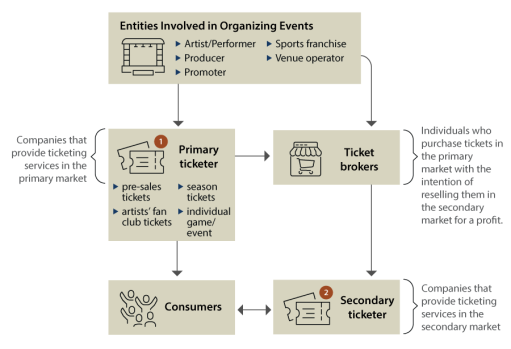
Starting in 2019, the Face Value Exchange program started by Ticketmaster was created to allow for artists to keep prices relatively cheap for fans who wish to attend their tour. Essentially, if the artist chooses this, fans cannot resell tickets over the original face value at which the artist sets them. According to Ticketmaster, “Face Value Exchange is enabled one week before sales start…as fans shop for tickets, they’re shown information on what Face Value Exchange means”. Furthermore, the price sold is even more restricted due to what is called a “transfer-restricted ticket”. This means that fans are not as easily able to sell tickets on other platforms, where there is not as much price restriction. All of these restrictions allow fans to purchase tickets at a reasonable price, and allows more fans the opportunity to experience their chosen concert.
However, artists are not forced to use this feature, and not all do. As of late, more and more artists are choosing this. Furthermore, this is only an option for Ticketmaster, meaning that prices are not restricted on other platforms, such as StubHub, TickPick, and Gametime.
Olivia Dean, a newfound pop singer and Best New Artist Grammy winner, has been a prominent advocate for fair ticket prices for her fans trying to attend her The Art of Loving Life tour. According to People.com, Dean saw how many fans couldn’t afford to come to her tour. After calling out Ticketmaster on her Instagram account, Ticketmaster capped prices on Dean’s tour, ensuring all tickets are at face value and fair for all fans. This means that all tickets will stay within the $100-$300 range throughout the tour. Furthermore, Ticketmaster refunded the markup people paid for resold tickets. Dean will soon be taking a stop in Toronto, Canada, meaning that even Berkley community members can benefit from her promise of fairly priced tickets.

Noah Kahan, a folk/rock singer/songwriter, has also taken action for the resale prices for his upcoming tour, the Great Divide Tour. One of Baylor University’s news sites, Baylor Lariat, stated that Kahan has also been outspoken about setting fair prices on Ticketmaster resale prices. Through the Face Value Exchange program, Kahan gives every fan a fair chance to see him on tour. More so, most tickets will be non-transferable, meaning once you buy them at face value, you can’t give them to someone else. However, some states don’t allow this, reasoning that once you buy the tickets, they are yours to sell to whoever you like. Nevertheless, prices will still be at face value, which is an improvement compared to other artists’ tours.
This change in the industry is a huge step up in fairness for all fans. Now, anyone can go to a concert, not only people who have the money to spare. In a statement released on Instagram, Kahan highlighted the importance of getting tickets to the fans, instead of bots. The dedication to fair prices that artists are showing is reassuring for fans everywhere, knowing that these artists really do care about helping their fans, instead of just making a profit. Hopefully, this is an indicator that going forward, ticket resale prices will be fair for all and be sold at their face value rather than being resold for outrageous prices.