

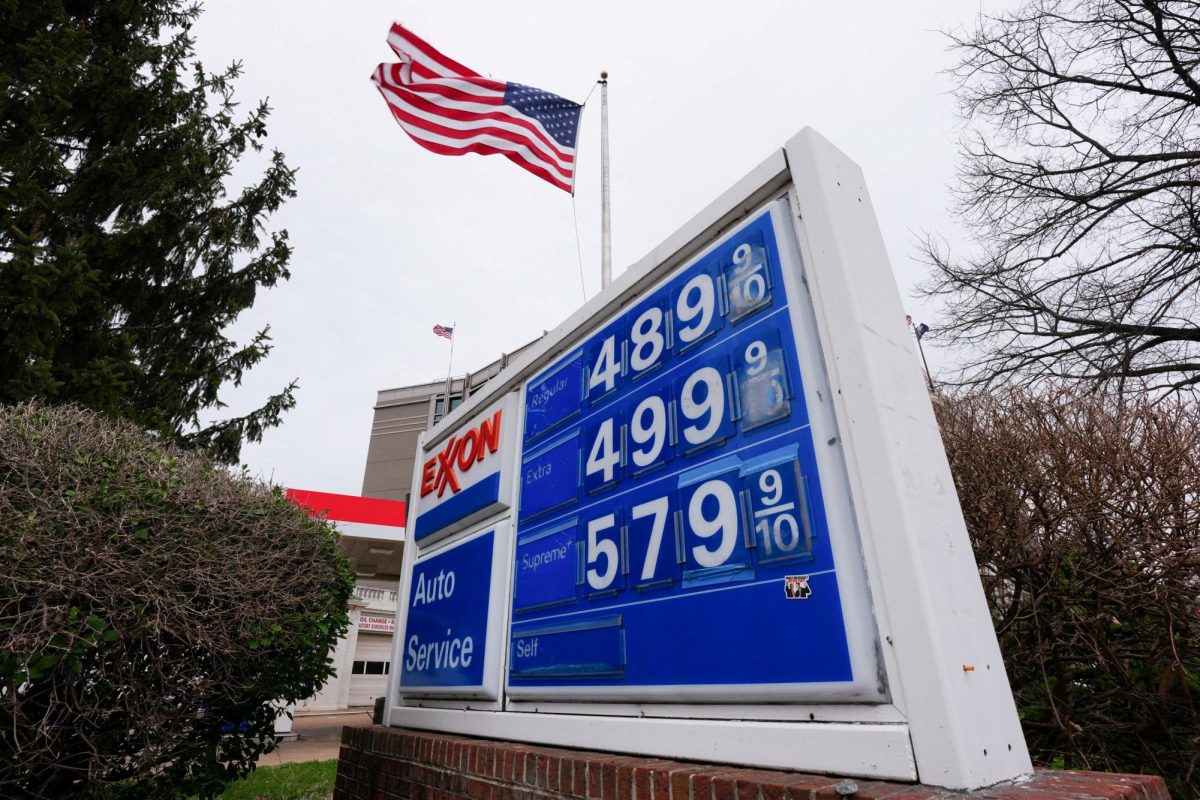
As tensions in the Middle East rise, America is starting to feel the impact. Currently, the national average for a gallon of gas is $4.16, up from around $2.80 before the American war with Iran started. On top of that, nearly one-fifth of the world’s oil trade is transported through the Strait of Hormuz, a passage of water between the Gulf of Oman and the Persian Gulf.
Iran is currently in control of the strait, and the Iranian government has threatened to destroy any ship that attempts to pass through the strait with anti-ship missiles. The United States Navy has deemed it “too dangerous” to escort ships through this strait as long as Iran holds control of it. Although the U.S. has claimed to have this settled in the near future, Americans are feeling the economic impact of being cut off from the critical imports of oil.
Before this conflict, a barrel of crude oil would be bought for around $65. Recently, however, the National Benchmark oil, WTI Crude, has shot up in price to nearly $115 per barrel. Due to this increase, gas prices around the nation have risen to an average of $4.16 per gallon, up over an entire dollar from a month ago.
These prices are already high, but if the United States cannot convince Iranian authorities to reopen the Strait of Hormuz, prices for oil aren’t expected to stop rising anytime soon.
Ebrahim Zolfaqari, a spokesperson for Iran’s Khatam al-Anbiya military-command headquarters, recently said that countries should prepare for oil prices to reach $200 per barrel, which experts have suggested may be true if the U.S. and its allies cannot neutralize Iran’s ability to interfere with the strait.
While an oil crisis like this could be detrimental to many different parts of the U.S. economy, the biggest concern for young drivers is how to grapple with climbing gas prices. Berkley High School senior Vega Nischan said, “It’s definitely more difficult, we have to coordinate more as a family, with whose gas will cost more, for carpooling, how we will split the money, and for long-distance trips, we usually don’t want to use my car.”
Nischan drives a 2013 Volkswagen Tiguan. Her gas tank holds 16 gallons, which she fills up around twice a month. “A full tank of gas, since my car takes premium gas only, can cost anywhere between $50 and $70 dollars,” said Nischan. On the high end, she spends $140 on gas alone each month.
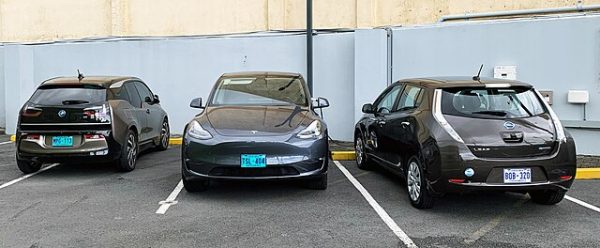
As prices rise to extreme levels, young drivers like Nischan are looking for solutions. “ ” said Nischan. Although this may seem extreme, she believes that prices of gas are “getting outrageous,” and she became aware of how much more she is spending on gas than her friends and family that have more fuel-efficient cars because of this conflict.
As a result of this conflict, demand for electric and hybrid cars is expected to climb. In 2022, when Russia invaded Ukraine, and we saw a similar spike in gas prices, the tipping point for electric cars to be more cost-efficient seemed to be around four dollars per gallon. BloombergNEF, a company who researches the cost of sustainable technologies, predicts that gas prices over four dollars would result in EVs becoming the cheaper option for vehicles. Additionally, many electric cars that were leased during this conflict are coming off of lease this year. This will result in the amount of used electric cars re-entering the market rising, allowing more general access to the people who don’t want to purchase a full-priced electric car in the current economy. Like Nischan, many people looking for solutions in this oil crisis may turn to used electric or fuel-efficient vehicles.