
March is Women’s History Month; it’s a time to celebrate and remember women who have made history. Many people focus on the more well-known figures, often overlooking those who are unnoticed, but still made an impact. While many women have changed history, not all have had the spotlight on them. Take a look as we explore six historically significant women who sparked change and made history.
Elizabeth Blackwell (Medicine)
Born on Feb. 3, 1821 in Bristol, England, after moving to the United States at age 11, Blackwell looked up to doctors for their courageous work after witnessing a friend die from a life-threatening disease. At the time, there were no female doctors; Blackwell longed to break the gender barrier and become the first woman in the medicine field. Despite being very studious and intelligent, Blackwell was rejected from 29 medical schools before being accepted into Geneva Medical College in 1847. She studied endlessly, trying to prove that women can break standards. After graduating at the top of her class, Blackwell was awarded her degree, ultimately becoming the first female doctor. This was not an easy task. Medical school is hard as it is, but especially when facing gender discrimination. She primarily focused on women and children while also advocating for women’s rights and inclusion in the medical field. The sacrifices and hardships Blackwell faced prove how difficult it was; however, she miraculously overcame such challenges. Though Blackwell passed away on May 31, 1910, her legacy lives on. She inspired many across the world and paved the way for women as she went.
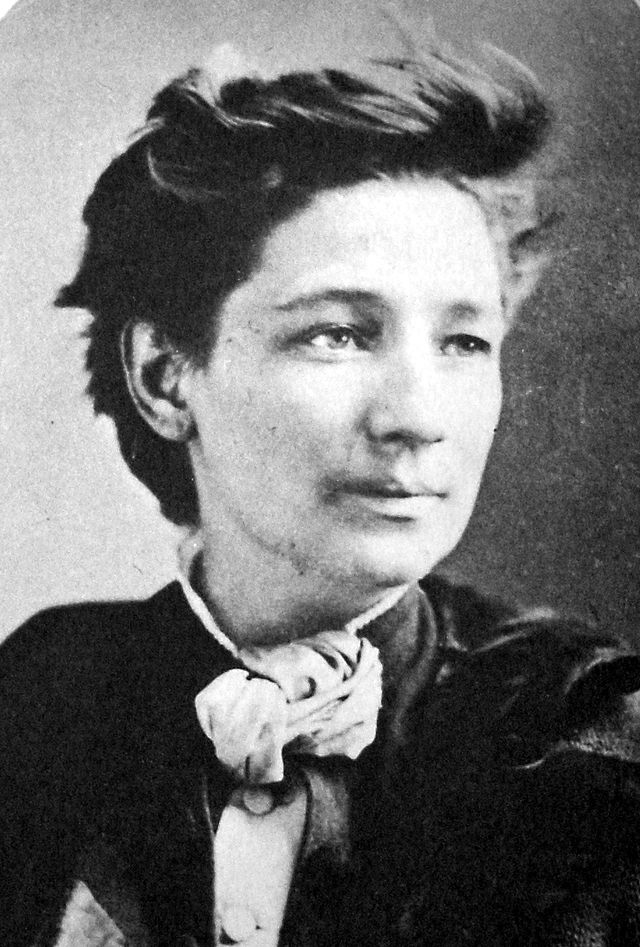
Victoria Woodhull (political leader)
Victoria Woodhull was born Sept. 13, 1838, in Howell, Ohio. Her childhood wasn’t easy, growing up in poverty with 10 siblings, as well as living in a time when education wasn’t as accessible, especially for women. Woodhull attended school for only three years before dropping out. She spent her early years in a traveling medical clairvoyant, selling medicines and telling fortunes alongside her family.
In 1853, at the early age of 15, she married Canning Woodhull, a 28-year-old doctor, who would eventually end up being one of her three husbands. Canning was an alcoholic who was neglectful towards Woodhull and their two children. Being fed up with these antics, she divorced Canning Woodhull, sparking her interest and future support of the free love movement, a social movement advocating for love and sexual relationships based on personal choice rather than legal or religious influence. Supporting this movement, she and her sister published Woodhull and Claflin’s Weekly, a newspaper supporting the actions of the movement. After the marriage of her second husband, she partnered with her sister, Tennessee Claflin, and business magnate and philanthropist Cornelius Vanderbilt to form a brokerage with the money Vanderbilt invested. This made her the first woman to operate a financial firm on Wall Street. They were given one of the nicknames, the “Queens of Finance”. While this was a huge success, Woodhull wanted to be more a part of the political agenda.
Finally, by 1869, she became a part of the Women’s Suffrage Movement. Not only did she make history in 1871 by becoming the first woman to testify before a committee of the House of Representatives, but she did it again in 1872 when she was the first woman to run for president under the New Equal Rights Party. While she didn’t win the election, her courage and commitment clearly shone through. Throughout her life, she faced many hardships, but always persevered no matter the social standards, gender, or support. Her story can influence the new generation or even those who want to make a change. Even though her life ended on June 9, 1927, her story will still be carried on, inspiring those who came after her.

Claudette Colvin (Civil Rights)
Before Rosa Parks was arrested, Caludette Colvin was put behind bars. On Sept. 5, 1939, Colvin was born. Raised by her aunt and uncle, Colvin grew up financially unstable, which ultimately led to her urge to spark change. In a time during segregation, she broke barriers. On March 2, 1955, Colvin boarded her bus home from Booker T. Washington, her high school. Due to the white section of the bus being filled, a white woman had been left standing. Rather than giving up her seat for the woman, Colvin refused. Because of studying the Constitution at school, Colvin “Knew [she] had rights” and resisted the oppression. Pulled off the bus and harshly arrested, 15-year-old Colvin sat in the back of a cop car, listening to officers talk inappropriately about her body. Activists in Montgomery were outraged, and Rosa Parks and others began fundraising for Colvin’s case. Letters were sent to Parks’ apartment to join the fight. After her trial, she was charged with assault against the officers who made her arrest. Colvin was outraged because that was not the case; her actions during the arrest were not worthy. Thankfully, the community decided not to pursue her case, which allowed Colvin to work with Parks over the summer, fighting for desegregation and freedom for all. Her story inspired many, including Park’s, when she refused her seat on Dec. 1, 1955. In the end, Colvin and others laid the foundation for change. Unfortunately, Claudette Colvin passed away on Jan. 13th of this year. Her actions were a key part of the movement to end racism and will forever be remembered.
Tarana Burke (advocate against sexual violence)
Long before the simple but powerful hashtag “me too” went viral, Tarana Burke was working to give the survivors of sexual violence a voice. Born Sept. 12, 1973, Burke lived in the Bronx with her family. From an early age, she developed a passion for activism. By the late 1980s, Burke joined the 21st Century Leadership Movement, an organization focused on youth development. This group quickly shaped the activism that Burke would later demonstrate. As she entered Alabama State University, her activism continued, and even after graduating, she carried that commitment into her continuous work with the 21st Century Leadership Movement. Through this group, Burke was introduced to survivors of sexual violence and abuse. Connecting with these women on a deeper level, as she herself is a survivor, sparked her motivation to provide women of color a safe space to share their stories.
It was in 1996, working as a youth camp director, that she met a young girl who shared her experience of sexual abuse with Burke. This woman had a tremendous effect on her, ultimately laying the foundation for what would later become the Me Too movement. Continuing to focus on young women of color, she co-founded a non-profit, JustBe, Inc., in 2007. The organization was designed to empower young black women through different programming as well as workshops. Having such great success and impact on the community, every public school in Salem, Alabama, adopted the program.
Not long after, Burke created the MeToo movement. An organization that was designed to create a safe, welcoming environment for survivors, letting them know they are not alone and have a voice to speak up. With #MeToo, people all over social media began to join, allowing them to connect. The hashtag went viral; it was used over 19 million times in one year. She has inspired many around the world to feel safe and support her movement in hopes of helping someone out there who might be struggling with abuse and violence. Now, Burke continues to lead the Me Too movement, raising awareness about sexual violence and working to create a lasting and systemic change.
Megan Rapinoe (Professional Soccer Player)

The two-time World Cup winner and gold medalist who spent her career advocating for LGBTQIA+ and women’s rights, Megan Rapinoe, was born on July 5, 1985, in her hometown of Redding, California. Rapinoe grew up as the youngest of six children, following in her older brother’s footsteps, joined the all-boys soccer team as there were no girls’ teams. All through high school Rapinoe worked hard in hopes of getting a college scholarship for soccer; her hard work paid off when she was offered money to play at Portland University. Rapinoe’s soccer career continued until the end of 2023. She played outstandingly throughout the years, making a large impact on the U.S. Women’s National Soccer Team and leaving her legacy on the field.
Historically, male soccer players have made more money than women. This infuriated Rapinoe so she worked to make a change and never gave up the fight. In 2016, she and four other teammates filed a federal labor complaint against U.S. Soccer for wage discrimination. When the complaint was stalled, she filed a lawsuit against the U.S. Soccer Federation for unequal pay.
After a long battle, Rapinoe’s resilience had shown through when U.S. Soccer agreed to pay male and female players at an equal rate in the future. According to Rapinoe, this was “a huge win,” and that set the stage for “the next generation up for something we only dreamed of,” according to NBC Today.
Along with being a women’s rights activist, Rapinoe also fought for LGBTQIA+ rights on and off the field. After coming out as a lesbian in 2012, she faced backlash and hate, but ultimately, Rapinoe knew she couldn’t hide from the world, stating, “it became very weird and not very authentic for me not to be out.” The soccer player has continued to show her support for the community. Facing discrimination, inequality, and receiving hatred is not easy to deal with, especially while being a professional athlete. Megan Rapinoe has done it all; she perseveres and pushes through the challenges, proving to the globe that women can change the world for the better.
Nadia Murad
Nadia Murad, born in 1996 in Kawjū, Iraq, was living in the Yazīdī village, which at the time was suffering, persecuted, and experiencing human trafficking. In August of 2014, Murad was captured by ISIL, a militant extremist group, and separated from her family. Her brothers, as well as her mother, were killed while Murad was taken to Mosul, Iraq, to be marketed as a sex slave. Throughout her time of being enslaved, she was bought and sold over and over again, eventually escaping but inevitably being found and brutally punished.
After that cruel experience, she told herself she would never try to escape again. But, fortunately, one day a door was left unlocked, where she escaped and made her way to the home of a Muslim family not connected to ISIL that protected her and helped her escape to a safer place.
Murad ended up leaving for Germany in 2015 with a refugee program for survivors. By Dec.16, 2016, she was asked to speak before the UN Security Council on human trafficking, where her testimony not only highlighted the ongoing suffering of the Yazīdī community, but also emphasized that sexual violence as a weapon of war extends far beyond any group.
By Sept. 16, 2016, the UN appointed her as Goodwill Ambassador for the Dignity of Survivors of Human Trafficking. Continuing to share her inspiring story, she wrote a memoir called “The Last Girl: My Story of Captivity, and My Fight Against the Islamic State.” Today, Murad is still advocating for the rights of women and minorities, founding Nadia’s initiative, following her intent while also assisting the redevelopment of minority communities that are facing a crisis. Her tireless efforts serve as a powerful example of resilience and how one person’s advocacy can create lasting change in communities worldwide.
Along with others, these six women have changed the world for the better, inspiring people across the globe. Whether it’s science, history, civil rights, politics, or simply advocating for what’s right, these encouraging women continue to benefit the world today. It’s important to preserve the stories of these six women and countless others. Take this month to remember those who have sacrificed and learned for the benefit of the world.