
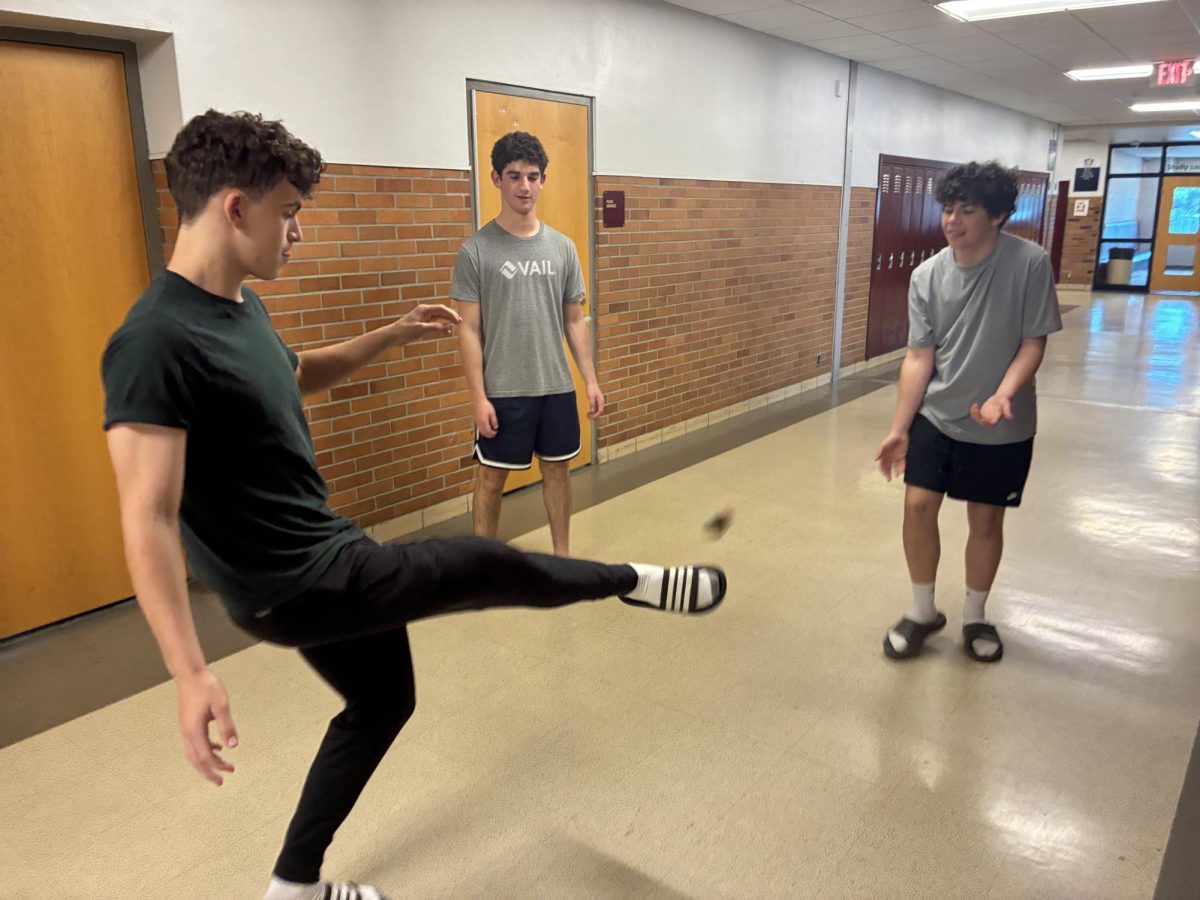
The bell rings, kids file out of their classrooms, and small circles quickly appear in the hallways. The teachers think they know what’s going on, yet find it hard to believe. Are these kids playing Hacky Sack? The small knit balls filled with beads were kicked around like a soccer ball. The teachers are amazed because they haven’t seen kids “hacking” since they were kids.
The Hacky Sack craze has suddenly taken over schools, playgrounds, and basically anywhere kids are hanging out. There are some fun rules people use when playing. Everyone stands in a circle; the minimum number of players is two, and the circle can grow from there, leaving room for multiple players at once. Of course, you cannot use your hands except to serve the hack sack to another player; you cannot serve to yourself. Another fun rule dictates that no player is allowed to say “sorry.” This turns into a lot of “my bad” when a mistake is made. Even though these rules are mostly universal, they change depending on where and who you are playing with. The pinnacle of it is for every player in the circle to touch the Hacky Sack before it hits the ground. This is called a “hack,” or if you really get it going, a “double hack.’
This sport was invented in 1972 by a physical therapist looking to help a patient rehab after a knee injury. The sport peaked in the 1980s and became a major cultural staple with kids in the 1990’s. At one time, it became a professional sport that even had its own official organization, World Footbag. Mostly, it became popular because it gave kids something to do. At a time when there were no cell phones to stare at, no computers, and no social media, it was an active social outlet for kids of all ages and abilities.
Ironically, the rebirth of the sport was born through social media. Kids today are now gravitating away from their phones and technology. The act of actually interacting with friends in person is oddly fun and an outlet away from technology that appeals to this social media-soaked generation. It is also a cheap, easy way to hang out. Berkey student Asa Summer, an active Hacky Sack player, said in an interview, “My dad actually always played, and it blew up on TikTok, becoming popular during baseball season.” The passing down of this sport, as well as the media attention, was the perfect storm to bring back the game. Another factor that could be in play is the “30-year nostalgia rule”. This rule suggests that every 30 years, a trend like fashion, music, and aesthetics reemerges in popularity. The adults who played hacky sack throughout their childhood have felt some nostalgia when they see it come back. The first thing they want to do is show the new generation the skills they have been practicing for 3 decades. School Resource Officer, Sergeant Dave Arney, said, “I haven’t seen Hacky Sack since I was in high school.” The pattern of old trends coming back into popularity is repeating its cycle with Hacky Sack. Even though nobody knows how long this trend will last, the fun and nostalgia have clearly not been forgotten by the older generation. Now, in today’s day and age, with kids trying to disconnect from their phones, this activity is a great step forward. Connecting with friends and spending time outside could be just the thing that this generation needs in today’s digital world.